
Anúncios
Empty rooms hold more than nothing. They whisper stories, embrace silence, and offer a canvas where memory and imagination dance in the space between what was and what might be.
🏛️ The Architecture of Absence
Walking into an empty room triggers something primal within us. The hollow echo of our footsteps, the way light plays differently across bare walls, the unexpected vastness of a space stripped of furniture and purpose—these elements combine to create an experience that is simultaneously unsettling and deeply profound. Absence, we discover, is not merely the lack of presence but a presence unto itself.
Architecture takes on new meaning when rooms stand vacant. We suddenly notice proportions we overlooked when the space was cluttered with daily life. The height of ceilings, the placement of windows, the quality of natural light—all these design elements emerge from obscurity. An empty room reveals the skeleton of intention that architects embedded in their creations, the foundational dream that furniture and inhabitants later obscure.
This phenomenon extends beyond physical architecture. Empty rooms become emotional architecture, spaces where our psyche projects, reflects, and sometimes confronts itself. The absence of external stimulation forces us inward, making these void spaces surprisingly full of internal discovery.
The Poetry of Echoes and Reverberations
Sound behaves differently in emptiness. The acoustic signature of a vacant room—that characteristic echo—serves as a sonic fingerprint of the space itself. When we speak or move in an empty room, we hear not just our actions but the room’s response, its dimensions translated into the language of sound waves bouncing off hard surfaces.
Musicians and sound designers have long understood this quality. Recording studios deliberately create “dead” spaces and “live” spaces to manipulate how instruments and voices resonate. The difference between a carpeted, furnished room and an empty one isn’t just aesthetic—it’s acoustic, emotional, and experiential.
This echo becomes metaphorical as well. Empty rooms echo with the ghosts of previous occupants, the residual energy of conversations held, arguments settled, celebrations shared. We feel these vibrations even when we cannot name them, a phenomenon that speaks to our intuitive understanding of space as more than mere geometry.
Memory’s Empty Chambers
Our minds contain countless empty rooms—spaces we once inhabited but have since vacated. The childhood bedroom we left decades ago. The apartment from our first relationship. The office from a job that shaped us but ended. These mental spaces remain vacant yet viscerally real, accessible through memory and sometimes dreams.
Neuroscience reveals that spatial memory is among our most durable forms of recollection. We can walk through homes from our past with remarkable detail, mentally touching walls, opening doors, feeling the texture of experiences long concluded. These internal vacant spaces serve as museums of self, galleries where different versions of who we were still somehow exist.
When we physically encounter empty rooms, they often trigger these neural pathways. An unfurnished apartment during a viewing might unexpectedly transport us to another empty space from our history. This temporal collapse—past and present existing simultaneously in the container of absence—gives empty rooms their haunting quality.
📸 The Visual Language of Vacancy
Photographers and visual artists have long been captivated by empty rooms. From Edward Hopper’s paintings of solitary spaces to contemporary photographers documenting abandoned buildings, there’s an enduring fascination with uninhabited interiors. These images resonate because they invite projection—viewers fill the emptiness with their own narratives, emotions, and memories.
The aesthetic appeal of empty rooms often lies in their minimalism. Without the distraction of personal belongings, we appreciate pure form, light, and shadow. A single window becomes a portal. A doorway transforms into a frame within a frame. The geometry of corners and the convergence of walls create compositional elements that furnished spaces obscure.
Social media platforms have embraced this aesthetic, with hashtags like #emptyspaces and #minimalism garnering millions of posts. There’s something deeply contemporary about finding beauty in absence, perhaps reflecting our cultural moment of information overload and the corresponding desire for visual and mental breathing room.
Light as the Primary Inhabitant
In an empty room, light becomes the protagonist. Without furniture to interrupt its path, sunlight streams across floors, climbs walls, and creates dramatic gradients from bright to shadow. The time of day becomes visible in ways we rarely notice in occupied spaces. Morning light feels different from afternoon glow, and both contrast sharply with the quality of illumination at dusk.
Architects design for this interaction between emptiness and light. Le Corbusier famously described architecture as “the masterly, correct and magnificent play of masses brought together in light.” This principle becomes most apparent in vacant spaces where light can perform without obstruction, revealing the architect’s choreography of illumination and shadow.
The emotional impact of this dance shouldn’t be underestimated. Studies on environmental psychology demonstrate that natural light quality significantly affects mood, cognition, and well-being. An empty room bathed in golden afternoon light feels fundamentally different from the same space under fluorescent overhead lighting—not just visually but emotionally and psychologically.
Transitions and Thresholds: Empty Rooms as Liminal Spaces
Empty rooms often mark transitions. The apartment we’re moving into or out of. The house staged for sale, stripped of personality to become appealing to strangers. The hotel room before we’ve unpacked or after we’ve checked out. These vacant spaces exist at thresholds, between chapters of our lives.
Anthropologists use the term “liminal” to describe transitional states—neither here nor there, betwixt and between. Empty rooms embody liminality. They’re simultaneously endings and beginnings, closures and openings. This in-between quality gives them a peculiar emotional charge, a mixture of melancholy for what’s passing and anticipation for what’s approaching.
This transitional nature explains why empty rooms can feel both liberating and unsettling. They represent possibility—the blank canvas awaiting our imprint—but also loss, the erasure of what existed before. We project both hope and grief onto these vacant containers, making them emotionally complex despite their physical simplicity.
The Ritual of Emptying and Filling
There’s ritual significance in how we empty and fill rooms. Moving involves not just logistics but ceremony—the last items removed, the final walkthrough, the locking of doors on an emptied space. Similarly, furnishing a new space follows patterns that feel almost liturgical: which item enters first, how we christen the space with our belongings, when it begins to feel like home.
Different cultures approach these rituals differently, but the underlying recognition remains constant: the transition between emptiness and occupation matters. It marks change not just in external circumstances but in identity. We are different people in different spaces, and the moment of transition—when rooms stand empty—becomes a brief window where old and new selves coexist.
Interior designers and stagers understand this psychology implicitly. The strategic emptying of a space (decluttering, depersonalizing) allows potential buyers or renters to imagine their own lives within those walls. Paradoxically, making a space emptier makes it easier for others to envision it as full—full of their own possibilities, their own future.
🎭 Absence as Presence: The Fullness of Empty Space
Eastern philosophy has long understood what Western thinking is gradually recognizing: emptiness is not nothing. In Buddhist and Taoist traditions, void or emptiness (śūnyatā, wu) represents potential, the ground from which all things arise. An empty room, from this perspective, isn’t lacking but rather pregnant with possibility.
The Japanese concept of “ma” encapsulates this beautifully. Ma refers to negative space, the gaps and pauses that give meaning to what surrounds them. In architecture and design, ma isn’t wasted space but rather the breathing room that makes composition possible. An empty room embodies ma—it’s the pause between notes, the silence that gives sound meaning.
This philosophical framework transforms how we experience vacant spaces. Instead of seeing absence as deficiency, we might recognize it as opportunity. The empty room doesn’t lack furniture; it offers freedom from furniture’s constraints. It doesn’t miss decorations; it presents the decoration of pure form and light.
Meditation and the Empty Room Within
Many contemplative traditions use empty rooms for practice. Meditation halls, prayer rooms, and retreat spaces often embrace minimalism deliberately. The external emptiness supports internal emptying—the clearing of mental clutter, the quieting of constant cognitive chatter.
This practice reveals something profound: we carry cluttered internal rooms that benefit from the same emptying we might apply to physical spaces. The monkey mind, as Buddhist teachers call it, resembles an overstuffed apartment where finding anything becomes impossible. Creating internal empty rooms—spaces of mental silence and clarity—becomes a spiritual practice.
Interestingly, people who practice regular meditation often report changing relationships with physical space. They become more comfortable with simplicity, less dependent on external stimulation, more appreciative of emptiness. The inner work of creating mental vacant spaces transforms how we relate to actual vacant spaces.
The Urban Explorer’s Paradise: Abandoned and Forgotten Rooms
A subculture of urban explorers dedicates itself to finding and documenting abandoned spaces—empty rooms on a grand scale. Shuttered hospitals, decommissioned factories, foreclosed mansions—these locations attract photographers, adventurers, and those fascinated by decay and abandonment.
What drives this fascination? Partly it’s aesthetic—the way nature reclaims human spaces creates striking visual contrasts. Vines climbing through broken windows, water damage creating abstract patterns on walls, the juxtaposition of former human order with organic chaos. These spaces tell stories of boom and bust, ambition and failure, presence and subsequent absence.
But there’s also something deeply psychological at play. Abandoned rooms serve as memento mori, reminders that all things pass. The grand hotel that once hosted celebrities, now empty and decaying, speaks to impermanence. These spaces humble us, revealing the temporary nature of our constructions and, by extension, ourselves.
The Ethics and Dangers of Exploring Abandonment
Urban exploration exists in ethical and legal gray areas. Entering abandoned properties often involves trespassing. There are safety concerns—unstable structures, hazardous materials, the risk of injury far from help. Responsible explorers emphasize “take only photographs, leave only footprints,” respecting the spaces they document.
Yet the impulse to witness and document these empty rooms feels important. Without urban explorers’ photography, countless architectural and historical spaces would vanish without record. These images preserve not just buildings but the phenomenon of absence itself, creating archives of emptiness before inevitable demolition.
There’s poetry in this—using the fullness of photographic documentation to capture emptiness before it becomes the absolute absence of demolition. The empty room, briefly paused in its journey from presence to nothingness, immortalized in images that will outlast the space itself.
🏠 Empty Rooms in Literature and Cinema
Artists across mediums have recognized the evocative power of empty rooms. In literature, vacant spaces often symbolize psychological states—isolation, depression, potential, or freedom. Virginia Woolf’s “A Room of One’s Own” argues that creative work requires not just time but space, specifically empty space free from interruption and external demands.
Cinema uses empty rooms to magnificent effect. Stanley Kubrick’s symmetrical shots of vacant hotel corridors in “The Shining” create unease precisely because they’re empty—the absence of expected human presence becomes menacing. Conversely, films like “Lost in Translation” use the emptiness of hotel rooms to explore isolation and connection, the vacant space becoming a character in its own right.
Horror genres particularly exploit empty rooms, understanding that what we don’t see often frightens us more than what we do. The dark corner of an empty room invites our imagination to populate it with threats. The echo in a vacant hallway might be just an echo—or something else. Absence creates space for fear to flourish.
The Theater of the Empty Stage
Theater practitioners know the magic of the bare stage. Before sets are erected, before actors arrive, the empty stage holds infinite possibility. It could become anywhere, any time. Peter Brook’s influential book “The Empty Space” argues that theater requires nothing more than this—an empty space and someone crossing it while another person watches.
This theatrical emptiness mirrors life’s own staging. We enter empty rooms and make them into bedrooms, offices, studios, sanctuaries. We’re simultaneously actors and set designers, performing our lives in spaces we’ve furnished with meaning. When rooms empty again—when we leave, when we die, when buildings are demolished—it’s as if the play has ended and the stage has been struck.
Yet the empty stage always awaits the next performance, just as empty rooms await their next occupants. This cyclical nature—filling, emptying, refilling—speaks to something fundamental about space, time, and human existence.
Finding Peace in Emptiness: The Minimalist Movement
Contemporary minimalism represents a deliberate embrace of empty rooms and simplified spaces. Influenced by Japanese design principles and reacting against consumer culture’s clutter, minimalists argue that less creates more—more peace, more clarity, more freedom. Empty rooms aren’t unfortunate voids to fill but achievements to maintain.
This philosophy extends beyond aesthetics to lifestyle. Minimalists report that simplified physical spaces correlate with simplified mental states. The empty room becomes a metaphor and tool for the empty calendar, the cleared mind, the life stripped of unnecessary obligations and possessions. Absence becomes aspiration.
Critics argue that minimalism can be privileged—easy to embrace when you have resources and choices. There’s truth here; poverty-induced emptiness differs fundamentally from chosen simplicity. Yet the underlying insight remains valid: our relationship with empty space reveals our relationship with sufficiency, abundance, and what constitutes “enough.”
💫 The Future of Empty: Virtual Rooms and Digital Spaces
Technology is creating new forms of empty rooms. Virtual and augmented reality generate digital spaces that can be infinitely configured, emptied and filled at will. These virtual rooms might lack physical substance but trigger similar psychological responses to actual vacant spaces—the sense of potential, the invitation to project and imagine.
Digital minimalism mirrors physical minimalism, with people decluttering virtual spaces—deleting unused apps, clearing desktop icons, unsubscribing from notifications. The empty home screen becomes the digital equivalent of the empty room, a rest for overstimulated attention.
As we spend increasing time in digital environments, the question arises: how do we experience absence in spaces that don’t physically exist? Can a digital room feel empty in meaningful ways? Early experiences suggest yes—the blank document, the cleared inbox, the silent chat room all evoke responses similar to physical emptiness.
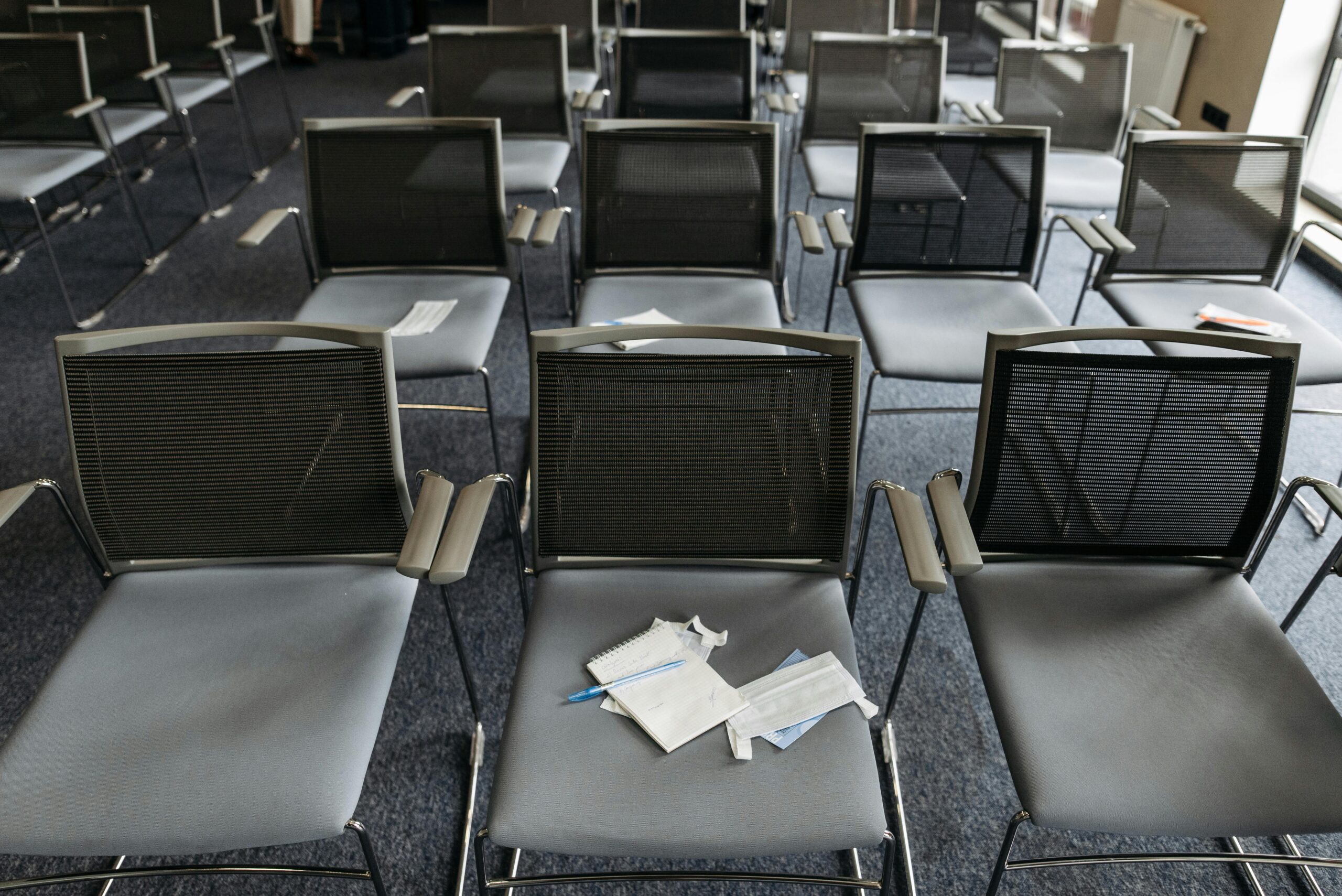
Embracing Your Own Empty Rooms
Understanding the beauty and mystery of empty rooms invites practical application. Consider conducting your own experiment with absence. Clear a room in your home—not permanently, but temporarily. Remove everything movable. Spend time in that space. Notice what you feel, what you notice, how the room reveals itself differently.
You might discover unexpected emotions. Relief at the simplicity. Anxiety at the lack of distraction. Memories surfacing in the quiet. Creativity sparked by the blank canvas. These responses offer valuable self-knowledge, revealing your relationship with fullness and emptiness, presence and absence.
Empty rooms teach us that space itself has qualities independent of what fills it. They remind us that absence and presence dance together, each giving meaning to the other. In a world that constantly pushes fullness—more possessions, more activities, more stimulation—empty rooms offer counterpoint, a different kind of richness found in restraint.
The echo in an empty room isn’t just sound bouncing off walls. It’s the voice of the space itself, speaking to those willing to listen. It’s the whisper of all that was and might be, the conversation between past and future happening in the present tense of absence. When we embrace this echo rather than rushing to silence it with furniture and noise, we discover that empty rooms hold treasures that cluttered spaces conceal—peace, potential, and the profound beauty of the pause between notes.
