
Anúncios
In a world more connected than ever, millions experience profound isolation surrounded by people. This paradox defines modern loneliness—a silent epidemic hiding in plain sight. 🌍
The Paradox of Modern Connectivity
We live in an era of unprecedented connection. Social media platforms promise to bring us closer, smartphones keep us perpetually reachable, and cities pack millions into tight spaces. Yet despite this apparent togetherness, loneliness has reached crisis levels across the globe. The World Health Organization has identified loneliness as a pressing public health concern, with effects comparable to smoking fifteen cigarettes daily.
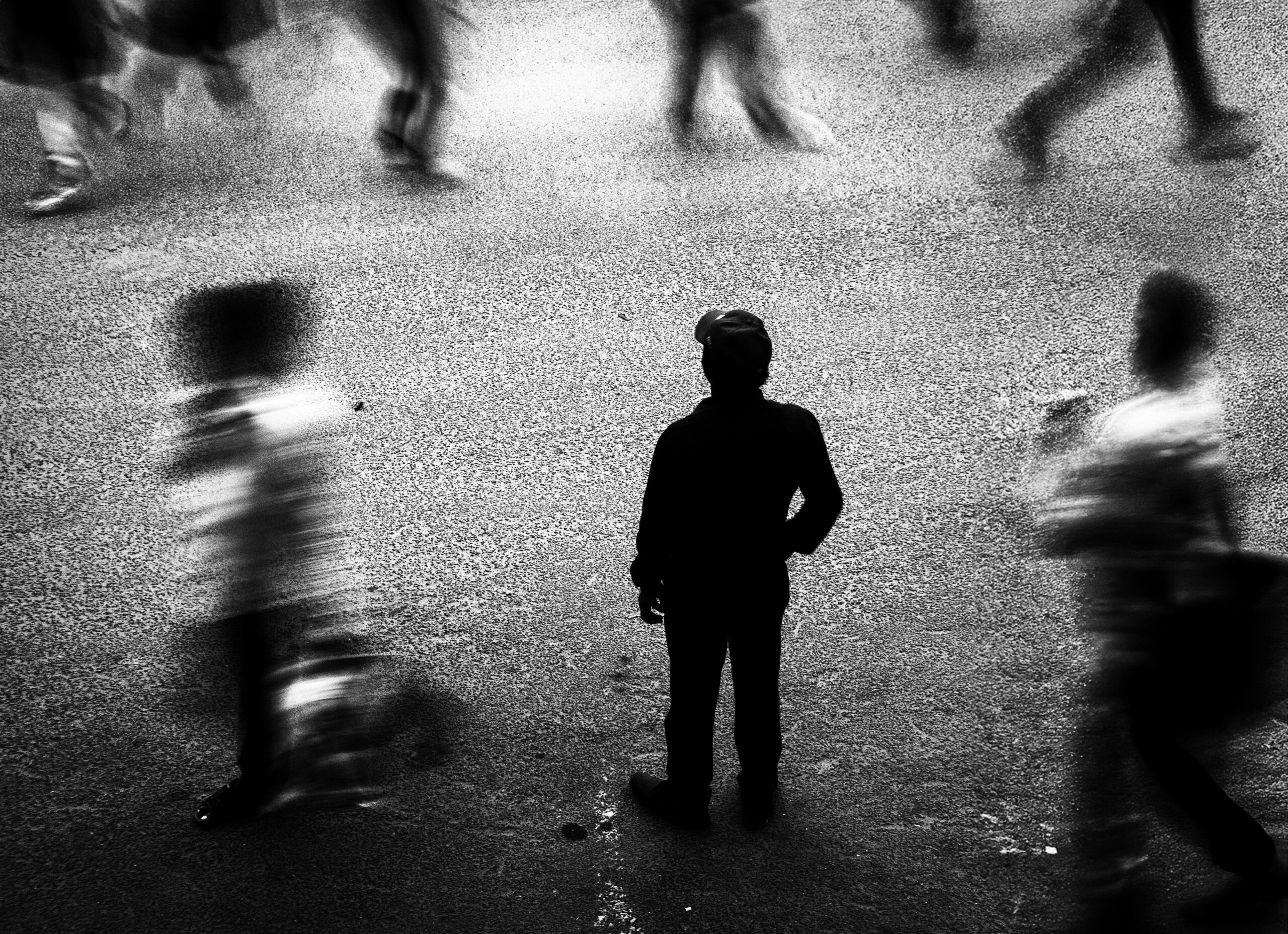
This contradiction between physical proximity and emotional distance creates what psychologists call “loneliness in the crowd”—the experience of feeling profoundly alone while surrounded by others. It’s the commuter on a packed train, isolated behind screens and earbuds. It’s the office worker surrounded by colleagues yet unable to form meaningful connections. It’s the party-goer smiling through conversations while feeling utterly disconnected.
Understanding this phenomenon requires examining how modern life has transformed the very nature of human connection, creating conditions where quantity of contacts has replaced quality of relationships.
When Surrounded Means Alone: Understanding Crowd Loneliness
Loneliness in crowded spaces represents a unique form of isolation. Unlike solitary loneliness, where physical separation explains the feeling, crowd loneliness involves a disconnect between external circumstances and internal experience. You’re physically present with others, perhaps even interacting, yet emotionally unreachable and unreached.
This type of loneliness often feels more acute because it carries additional layers of shame and confusion. “How can I feel lonely when I’m surrounded by people?” becomes a haunting question. The apparent contradiction makes sufferers question their own experiences, leading many to suffer in silence rather than seek help or acknowledge their feelings.
The Psychological Mechanisms Behind It 🧠
Several psychological factors contribute to feeling lonely in groups. Superficial interactions that lack emotional depth leave us hungry for genuine connection. When conversations remain surface-level—discussing weather, work tasks, or trending topics—they fail to satisfy our need for authentic human contact.
Social comparison intensifies these feelings. Surrounded by others who appear connected and content, we judge our internal experience against their external presentation. This comparison trap makes us feel even more isolated, convinced that everyone else has mastered connection while we alone struggle.
The performance of social interaction can paradoxically increase isolation. When we focus on how we’re perceived rather than genuine engagement, we create an additional barrier between ourselves and others. We become actors playing roles rather than humans seeking connection.
Digital Connection: Bridge or Barrier? 📱
Technology has fundamentally altered how we relate to one another. Social media platforms promise connection but often deliver something quite different—a curated highlight reel that substitutes for genuine intimacy. We accumulate hundreds or thousands of “friends” and “followers” while our capacity for deep connection atrophies.
Research consistently shows that increased social media use correlates with higher loneliness levels. The passive consumption of others’ lives creates a false sense of connection while reinforcing feelings of exclusion and inadequacy. We witness celebrations, gatherings, and moments of joy that we’re not part of, amplifying our sense of being outside looking in.
Yet technology itself isn’t inherently isolating. Video calls enable connection across continents. Online communities provide support for niche interests and experiences. Mental health apps offer resources for those struggling with loneliness and isolation.
Finding Balance in a Digital World
The key lies not in rejecting technology but in using it intentionally. This means prioritizing active engagement over passive scrolling, choosing video calls over text when possible, and using digital tools to facilitate real-world connection rather than replace it.
Setting boundaries around technology use helps protect space for deeper connection. Establishing phone-free times, particularly during meals and conversations, signals that the present person deserves full attention. This simple practice can dramatically improve connection quality.
Urban Isolation: Alone in the Metropolis 🏙️
Cities concentrate people while often diluting connection. Urban environments create what sociologists call “civil inattention”—the practice of actively ignoring those around us to manage sensory overload. We develop psychological armor to navigate crowded spaces, but this armor also blocks potential connection.
The architecture of modern cities reinforces isolation. High-rise apartments create vertical neighborhoods where residents might share walls but never share words. Commuter culture means we travel through our cities in bubbles—cars, trains, buses—rarely engaging with fellow travelers. Commercial spaces prioritize transactions over interactions, efficiency over community.
Urban loneliness particularly affects specific populations. New arrivals to cities, lacking established networks, struggle to break into existing social circles. Elderly urban residents face isolation as neighborhoods change and mobility decreases. Young professionals, despite active social lives, report high loneliness rates as they navigate superficial networking rather than genuine friendship.
Creating Connection in Concrete Jungles
Despite these challenges, cities also offer unique opportunities for connection. The diversity and density that can isolate can also facilitate finding like-minded individuals. Community gardens, neighborhood associations, and local gathering spaces provide infrastructure for connection when we choose to use them.
Some cities are implementing “loneliness interventions”—public benches designated for conversation, community dining initiatives, and urban planning that prioritizes gathering spaces. These efforts recognize that addressing urban loneliness requires structural solutions, not just individual effort.
The Workplace Paradox: Surrounded Yet Separate 💼
Modern workplaces gather people for significant portions of their waking hours, yet workplace loneliness has reached epidemic proportions. Open office plans promised increased collaboration but often delivered noise and distraction rather than meaningful interaction. Remote work, accelerated by global events, has created new dimensions of professional isolation.
Workplace loneliness stems from several factors. Competitive cultures discourage vulnerability and authentic sharing. Hierarchical structures create distance between levels. The transactional nature of professional relationships means we may work alongside people for years without truly knowing them.
The consequences extend beyond personal wellbeing. Lonely workers show decreased productivity, higher turnover, and increased burnout. Organizations are beginning to recognize that fostering genuine connection isn’t just humane—it’s economically essential.
Building Workplace Community
Forward-thinking organizations are creating space for authentic connection. This includes facilitating non-work interactions, creating mentorship programs that foster relationships beyond skill transfer, and training leaders to recognize and address isolation among team members.
Simple practices can significantly impact workplace connection: regular check-ins that include personal elements, team activities that allow people to be seen beyond their professional roles, and creating psychological safety where vulnerability is valued rather than penalized.
Social Anxiety Meets Social Hunger 😰
For many experiencing crowd loneliness, social anxiety plays a significant role. The desire for connection wars with fear of rejection, judgment, or awkwardness. This creates a painful cycle: loneliness drives the need for connection, but anxiety prevents reaching out, which intensifies loneliness.
Social anxiety in crowds manifests uniquely. The presence of many people can feel simultaneously overwhelming and isolating. Every interaction carries the weight of potential judgment from numerous observers. The complexity of group dynamics can paralyze those uncertain about how to navigate social spaces.
Understanding this relationship between anxiety and loneliness is crucial for addressing crowd loneliness. Approaches must acknowledge both the desire for connection and the legitimate fears that prevent it.
Cultural Factors Shaping Collective Loneliness 🌏
Loneliness doesn’t exist in a cultural vacuum. Different societies have varying norms around independence, collectivism, and acceptable forms of connection. Highly individualistic cultures, which emphasize personal achievement and self-reliance, often report higher loneliness rates than collectivist societies that prioritize community and interdependence.
However, rapid social change affects all cultures. Traditional community structures—extended families, village life, religious congregations—have weakened globally. This transition has occurred faster than new forms of connection have developed, creating a connection gap across diverse cultures.
Cultural stigma around admitting loneliness varies widely. In some contexts, acknowledging isolation is seen as failure or weakness, driving sufferers further into silence. Breaking these cultural barriers requires normalizing loneliness as a common human experience rather than individual failing.
The Physical Toll of Emotional Isolation 💔
Loneliness isn’t merely an emotional state—it has profound physical consequences. Research links chronic loneliness to increased inflammation, compromised immune function, cardiovascular disease, and accelerated cognitive decline. The stress of prolonged isolation affects the body at cellular levels, literally changing how our genes express themselves.
Understanding these physical impacts reframes loneliness from a soft emotional issue to a serious health concern. This perspective shift can help mobilize resources and reduce stigma around seeking help for feelings of isolation.
Breaking Free: Pathways from Isolation to Connection 🌟
Addressing crowd loneliness requires action at multiple levels—individual, community, and societal. Personal strategies must be supported by structural changes that facilitate rather than hinder genuine connection.
Individual Strategies for Connection
Start with vulnerability. Authentic connection requires risk—the risk of being truly seen, of potential rejection, of admitting needs. Begin with small disclosures and notice how others respond. Often, vulnerability invites reciprocal openness, deepening connections rapidly.
Prioritize quality over quantity in relationships. Rather than spreading energy across numerous superficial connections, invest in a smaller number of deeper relationships. Schedule regular, meaningful time with people who matter, protecting this time as sacred.
Practice presence. When with others, be truly there. This means managing digital distractions, engaging actively in conversations, and offering genuine attention—perhaps the most valuable gift in an attention-scarce world.
Seek structured social opportunities. Joining groups around shared interests—book clubs, sports leagues, volunteer organizations—provides a framework for regular interaction with built-in conversation topics, easing the pressure of connection.
Community-Level Solutions
Communities can implement initiatives that facilitate connection. Public spaces designed for lingering rather than passing through encourage spontaneous interaction. Community events that bring diverse groups together help build neighborhood cohesion.
Programs specifically targeting at-risk populations—the elderly, new residents, caregivers—can provide crucial connection points. These might include buddy systems, regular community meals, or facilitated social groups.
Societal Shifts Needed
Addressing the loneliness epidemic requires cultural conversation about the importance of connection. This includes workplace policies that protect time for relationships, urban planning that prioritizes community spaces, and education that includes social-emotional learning alongside academic skills.
Healthcare systems must screen for loneliness as routinely as they check blood pressure, recognizing isolation as a serious health risk factor requiring intervention.
Rediscovering the Art of Human Connection 💫
Breaking the silence of togetherness begins with acknowledging the problem. Loneliness in the crowd thrives on shame and secrecy. When we name this experience, when we recognize how common it is, we begin dismantling the barriers that perpetuate it.
The path forward requires reimagining what connection means in the modern world. It means creating space for slowness in a fast-paced society, depth in a culture of surfaces, and vulnerability in environments that reward performance. It means recognizing that genuine human connection isn’t a luxury or nice-to-have—it’s a fundamental need as essential as food, water, and shelter.
As individuals, we must commit to showing up authentically in our relationships, risking the discomfort of real connection. As communities, we must build structures that support rather than hinder these connections. As a society, we must acknowledge that addressing loneliness isn’t about individual weakness but about adapting our collective structures to support human flourishing.
The silence of loneliness in the crowd can be broken, one honest conversation at a time, one vulnerable moment at a time, one genuine connection at a time. The first step is simply acknowledging: you are not alone in feeling alone. Millions share this experience. And together—truly together—we can create the connected world we all hunger for.
